
The year 2014 is likely to be a "slow recovery year" for India, with economic growth rising, inflation easing and currency and rates largely stable, Citigroup said.

Discount retailer DMart (Avenue Supermarts) hit its highest levels in a year and a half last week and is up over 11 per cent in the last one month. The company depends on low operating costs to offer the lowest prices to consumers, which enables sales velocity and scale, further reducing costs. This virtuous feedback loop has helped DMart gain market share in a sector dominated by unorganised stores.

The 'terrible' surge of the coronavirus cases in India has severely impacted COVAX's vaccine supply in the second quarter of this year to the extent that there will be a shortfall of 190 million doses by the end of June, according to a joint statement by the WHO, UNICEF, GAVI and CEPI.

Operating margins have been the primary driver of corporate earnings in India in recent quarters, despite revenue growth suffering from weak consumer demand. Companies across sectors have reported a sharp improvement in earnings before interest, tax, depreciation, and amortisation (Ebitda) margins over the past two years, benefiting from lower commodity and energy prices. Higher margins more than compensated for slower revenue growth, resulting in double-digit growth in net profit for five consecutive quarters.

Shortages of chips will impact the car market

Global economy will have to grapple with few tough situations in 2015.

After disappointing guidances in the first quarter (Apr-Jun) of the 2023-24 financial year (Q1FY24) and valuation downgrades, the Indian IT sector could see some positive repricing as the bad news for IT maybe easing in Q2FY24. A key negative factor was weaker demand from the US financial sector and from North America in general. The latest GDP (gross domestic product) estimates and sector-specific news suggest that the demand situation may not be quite so bad with a gradual recovery in tech spending in Q2.

Inflation has remained a major concern.

Concerns over economic slowdown, muted earnings, crisis in the auto industry and global trade issues have been weighing on investor sentiment, experts said.

Global IT spending, which dropped 8.9 per cent last year, will rise 8.1 per cent in 2010 to more than $1.6 trillion, said a new report by Forrester Research.

The new Samvat 2080 is viewed as a year of hope for industrial and precious metals. A key reason is the expectation of US interest rates peaking, followed by a reduction in the coming months. Regarding crude oil, its trajectory depends more on how the situation unfolds in West Asia.

D&N cites positive changes in momentum in certain segments of economy, but says some areas of concern remain

The RBI guv said global economy is actually recovering, though slowly

Former RBI governor Raghuram Rajan on Tuesday said it is too premature to think that India will replace China when it comes to influencing global economic growth. However, the situation may change going forward as India is already the world's fifth largest economy, it is growing and has the potential to keep expanding. At a World Economic Forum (WEF) press briefing on the recently released Chief Economists Outlook that saw majority of them expecting a global recession in 2023, Rajan said any recovery in the Chinese economy would definitely boost the global growth prospects.

Unemployment has been rising among the young, with authorities suspending data disclosures after youth unemployment crossed 20 per cent.

Outlook for external sector is the most favourable.

The number of mergers and acquisitions (M&As) in August that involved private equity (PE) funds was the lowest in nearly three years. There were 26 such deals last month, according to data from tracker Refinitiv (part of London Stock Exchange Group). The last time monthly deal numbers were so low in recent times was January 2021 when Covid cases were picking up during the second wave of the pandemic.

While domestic market growth is important, the sales trajectory in the international markets, which account for 45 per cent of the revenues, will be a key rerating trigger, say analysts.

Equity benchmark indices ended flat on Wednesday with Sensex sliding 33 points and Nifty gaining 9 points after an unabated record-breaking rally in the last few trading sessions. Weak global market trends and fall in HDFC twins also spoiled markets party. The 30-share BSE Sensex dipped 33.01 points or 0.05 per cent to settle at 65,446.04.

'A key reason for the strong interest in IPOs has been an increased focus on profitability and reasonable pricing of deals.'

Information technology (IT) companies have been on the road to revival in the past one year. From being the worst-hit sector in 2022 with a loss of 26 per cent, the Nifty IT index closed 2023 with gains of 24 per cent. So far in 2024, the index is up around 7 per cent against the nearly flat Nifty 50 benchmark index. The IT index has been on a continuous decline in the last three sessions.

Equity and oil markets can breathe easy for now, as the developments in Russia are unlikely to trigger a runaway rally in crude oil prices, said analysts. India, which imports nearly 80 per cent of its crude oil requirement, has been dependent on cheap Russian oil over the past few months to keep inflation - a sore point for the equity markets - in check. For the Indian markets that are expected to remain volatile amid these developments, analysts believe, the progress of monsoon, fund flows - both foreign institutional investor (FII) and domestic - and the upcoming corporate earnings season back home remain key.
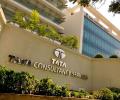
Tata Consultancy Services (TCS) has been ranked the third most-valued IT services brand globally, after Accenture and IBM, according to a report by Brand Finance. Four Indian IT services companies -- TCS, Infosys, HCL and Wipro -- secured spots in the top-10 global tally.

The index is currently trading at 149 per cent of its historical P/B valuation, surpassing its previous peak of 125 per cent made in 2020-21.

Moody's Investors Service on Thursday said the credit downturn arising out of COVID-19 will be short-lived but most economies will not return to pre-pandemic activity levels until 2022. In the year since the World Health Organisation (WHO) declared COVID-19 a pandemic on March 11, 2020, the virus has disrupted the global economy and triggered a credit downturn accompanied by a spike in bond defaults. "The credit challenges arising from COVID-19 have been substantial, but the credit downturn likely will be relatively short-lived. "Risks remain more significant for the sectors most vulnerable to restrictions on their normal activities," Moody's said in a global report in coronavirus. Stating that most economies will not return to pre-pandemic activity levels until 2022, Moody's said it expects a slow and bumpy global recovery and uncertainty around the macroeconomic outlook remains much higher than usual.

GDP growth of 7.7 per cent in the first half of this fiscal has "left sceptics gasping and woefully behind the curve", an RBI article said on Wednesday. It also stressed the buildup in the growth momentum is likely to be sustained. The article on the state of the economy published in the Reserve Bank's December Bulletin on Wednesday also said CPI-based retail inflation is expected to ease to 4.6 per cent in the first three quarters of 2024-25 from 5.6 per cent in November.

A fracture of interstate relations could be India's biggest risk coming out of the pandemic. This topped a list of critical risks for India over the next two years, according to Geneva-based World Economic Forum's Executive Opinion Survey (EOS), whose results were released on Tuesday. Other top risks include a debt crisis in large economies, widespread youth disillusionment, failure of technology governance and digital inequality.

Organisations may be less worried about survival over the next 12 months, but the return to a healthy operating environment is still some way off.

Shares of paint companies faced pressure, falling up to 5 per cent on the BSE in Monday's (February 26) intraday trade amid concerns that Grasim Industries' entry into the paint sector will intensify the competition. Asian Paints reached a 10-month low of Rs 2,850, slipping nearly 5 per cent after brokerage firm CLSA downgraded the stock following the Birla Opus launch. The paint maker's stock traded at its lowest level since April 28, 2023.

From the Sensex pack, Larsen & Toubro jumped 4.26 per cent to emerge as the biggest gainer, followed by IndusInd Bank, Tech Mahindra, State Bank of India, HCL Technologies, Power Grid, NTPC, Axis Bank, Kotak Mahindra Bank, HDFC Bank and Wipro. Mahindra & Mahindra, Infosys, UltraTech Cement and Hindustan Unilever were the major laggards.

Prime Minister Narendra Modi on Tuesday said India will become the growth engine for the world in the coming years, and the ease of doing business has improved with "mission-mode" reforms being undertaken by his government. Speaking at the BRICS Business Forum Leaders' Dialogue in Johannesburg, Modi also said India soon will become a $5 trillion economy.

The developed world's recovery, particularly that of the US, is not necessarily a positive for the Indian market.
HSBC's downward revision is in line with similar kind of revisions by a host of other think-tanks, research houses, investment banks and other agencies like the UN, Morgan Stanley, Goldman Sachs, Merrill Lynch, Stanchart and Citi.

From the Sensex pack, NTPC, Bajaj Finance, IndusInd Bank, UltraTech Cement, Bajaj Finserv, State Bank of India, Tata Motors, ITC, Power Grid and Larsen & Toubro were the biggest gainers. IndusInd Bank climbed 2 per cent after the company on Tuesday reported a 30 per cent jump in consolidated net profit in April-June quarter at Rs 2,124.50 crore, helped by core income growth and lower bad loan provisions.

Government's focus on infrastructure is the biggest positive for the Indian economy, followed by the improvement in tax collections and good consumption recovery.

Have the markets already played out their dynamics before the economy has even properly taken off? Are we now destined for a period of mediocre returns despite a strong economy? asks Akash Prakash.

The tech recovery has begun in the US and around the world with Q4 (2009).

'Investors should ideally consider equity allocations from a medium-to-long term perspective.'
S&P Global Ratings on Monday kept its forecast for India's economic growth unchanged at 6 per cent in the fiscal year starting April 1, before rising to 6.9 per cent in the following year. In the quarterly economic update for Asia-Pacific, S&P saw inflation rate easing to 5 per cent in 2023-24 fiscal, from 6.8 per cent in the current financial year. It saw India's gross domestic product (GDP) likely growing by 7 per cent in the current financial year ending March 31 (2022-23), before slowing to 6 per cent in the next 2023-24 fiscal.

HCL Tech was the top gainer in the Sensex pack, rising over 4 per cent, followed by HDFC Bank, Infosys, NTPC, Nestle India, TCS and HUL. NSE Nifty surged 337.80 points to 14,845.10.
